Wednesday, March 12, 2014

Art n' Seeds

i love anything to do with plants and growing delicious and pretty things. i love anything to do with art and design. i love especially when these two worlds come together in the tiny form of an heirloom seed packet.

hello Hudson Valley Seed Library! first and foremost as you might have gathered, Hudson Valley Seed Library is a seed supplier of heirloom and open pollinated garden seeds. Sourcing their seeds from their own farm or 'The Seed Sanctuary' in Accord, New York, and too trustworthy wholesale seed houses (as in not owned by or affiliated with any bio tech companies), Hudson Valley Seed Library is committed to the preservation and expansion of open pollinated heirloom seed varieties in a big way. Organically certified as of May last year and adhering to Vandana Shiva's Declaration of Seed Freedom, (https://seedfreedom.in/declaration/) what more could an enthusiastic gardener ask for? Well, really cute art on the seed packets actually. Every year Hudson Valley Seed Library celebrate the genetic diversity of their heirloom varieties by commissioning twenty artists to design a unique artwork for each new variety. Artists celebrate the history, beauty, cultural importance and diversity of each variety through their artworks. If you're lucky enough to be in New York at the moment, the Horticultural Society of New York is holding an exhibition for this years release from March 13-28th. to read more, visit

http://thehort.org/programs_exhibitions.html#hvsl2014 or
https://www.seedlibrary.org where you can read the stories and inspiration behind each seed packet artwork.


Wednesday, February 26, 2014

I EXIST. HARVEST EXISTS. Unbelievable I know, but its true. anyway, let me not bore you with the mundaneness of reasons behind the stall in my blogging life, let me instead entertain you with a little snippet of an exciting project that came up over the summer months. Aphra Magazine, named after the one and only Aphra Behn (one of the first female playwrights who penned the way for all women with an inclination to put pen to paper) and published out of the Apple Isle, is a broad reaching publication that tackles political, environmental and social issues, is totally fashion forward, has great taste in music etc etc etc the list goes on. Its all completely great. and, would you know it, little old Harvest has jumped onto the  Aphra bandwagon (ever so happily) to write about all things Urban Agriculture. here is the link to the article and to the homepage, stay tuned for next instalments..


Tuesday, November 26, 2013

Green Roofs Geelong

The Great Ocean Road, Geelong and Otway area is seriously starting to tick over with a buzz of opportunity and progression. I feel as though this area is literally on the cusp of exploding into a period of growth and expansion over the next decade and on and while normally the idea of ‘growth’ and expansion kind of terrifies me, I think perhaps that (fingers tightly crossed and ignoring previous bad planning and development), perhaps the region could be starting to head in the right direction of developing an area in a sustainable and ecologically friendly way. the reason I say this is due to a myriad of things, but specifically Future Proofing Geelong. Future Proofing Geelong is a partnership program between The City of Greater Geelong, EPA Victoria, Barwon Water, Deakin University, Committee for Geelong, Geelong Manufacturing Council and the Geelong Chamber of Commerce. Although it was a couple of years ago, the partnership signed a Sustainable Covenant that is an agreement for Future Proofing Geelong ‘to work together to see Geelong become nationally recognised as a city demonstrating sustainability leadership.’
With initiatives starting such as solar power on local community  buildings, saving energy in major buildings of the CBD, Better Block (see more below) and a host more its all pretty exciting to know that there is a legitimate push by those in ‘higher places’ to make sure Geelong develops in a sustainable manner. Most excitingly, added to this list at the start of this year is Green Roofs Geelong. Here’s a little excerpt from the project bulletin… “Imagine you are looking out over central Geelong towards the bay from one of the multi level buildings on the hill…What were once bare, vacant roof spaces are now a community and environmental assets, which help cool the city centre on hot days and bring a sense of energy and life. A city that saves energy, recycles storm water and feels alive, where birds and insects buzz between buildings on cool breezes…”, UM YES PLEASE! sounds pretty incredible doesn’t it. A friend of mine recently returned from a trip overseas and immediately emailed me telling me about how blown away she was by the amount of green roofs and urban roof top farms throughout major cities all throughout the country (USA). I guess Australia is still pretty behind when it comes to developments like this in comparison with rest of the world so to think that Geelong is pushing to become ‘The Green Roof Capital of Australia’, is truly exciting. Green Roofs can help combat the heat island effect by moderating the heat of buildings and keeping it cool. They encourage us to engage in the natural world and entice flora and fauna back into the concrete jungle. While it is still in its pilot stage of development, if you’d like to know more, go and have a squiz at www.geelongsustainability.org.au and follow the links. watch this space. 

Queenscliff Department of Primary Industries

Sunday, November 17, 2013

mutton bird vs. migration

the last week in this neck of the woods (otway ranges and great ocean road), have been utterly vile. to be completely honest. howling easterlies that were unrelenting in their battering, squalls of lashing rain that instantly drenched, and cold that sunk straight into the bones. NOT GOOD. however, spare a thought for the poor little Tasmanian Shearwater or Mutton Bird as its more commonly known. A migratory bird that calls Griffith Island home and nests there each year during the warmer months, they are currently on their way home and on the final stretch of their journey that has taken them essentially around the entire pacific ocean. During this very last stretch, the birds (in their hundreds) have been fighting against the winds and once again this year as it did two seasons ago, the howling easterly has taken its toll with many succumbing to exhaustion and literally falling from the sky and washing up on our shores. Its hard not to feel the sadness of such an event, particularly as its a protected species, but at the same time, mother nature seems to have an incredible capacity for regulating population numbers without human interference and perhaps this cyclical event is one such form of this regulation. we can only hope anyway. As i walked along the beach the other day surrounded by little mutton birds (who p.s shed nearly half if not more of their body weight during this arduous trip home), i tried to rack my brains to find a positive in a sad situation. Mother nature and her population regulation was one hypothesis, another one was looking at the bodies of the deceased Shearwaters and thinking how each one could essentially be a huge source of nitrogen and minerals for composting, breaking down into a rich source of elements to benefit the soil structure and of course then, helping our gardens to thrive and flourish. of course, probably not many people would show an interest in scooping up three or four dead birds and putting through their compost system, but fact of the matter is, when there are resources at your feet in their natural state, it seems foolish to ignore them and instead going to Bunnings or similar to buy pre made, fabricated and processed fertilisers, that are full of additives and chemicals that don’t need to be a part of our everyday life, particularly when it comes to growing our own food. so upshot of it all was that even though it was a negative situation, perhaps because it was an entirely natural event, it seemed relatively possible to envisage a way to turn that negativity into a positive by returning the deceased mutton birds back into the cycle of life and keeping it all ticking over as it would in its natural state. 


Tuesday, August 27, 2013

Permablitz Upwey

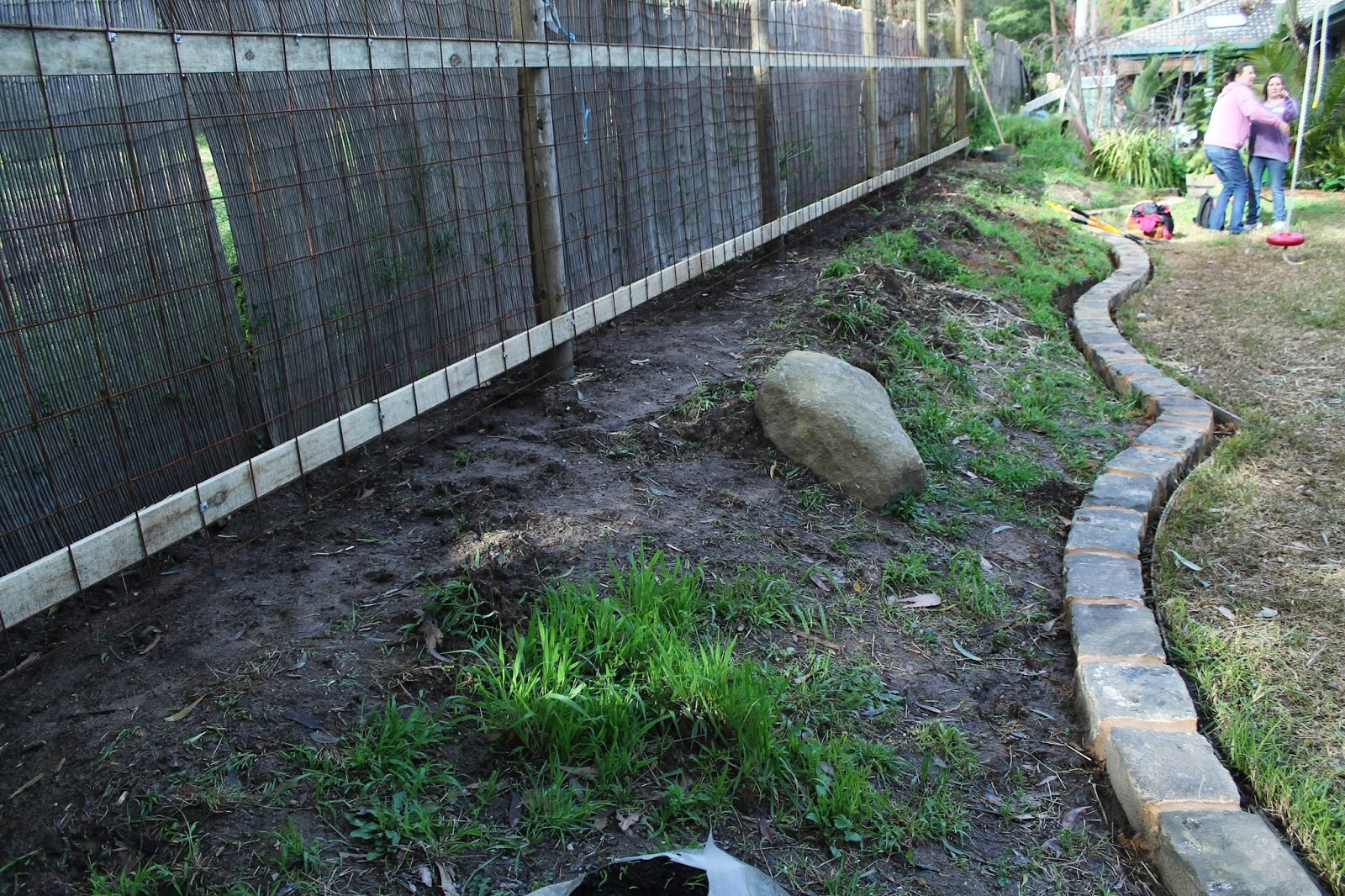
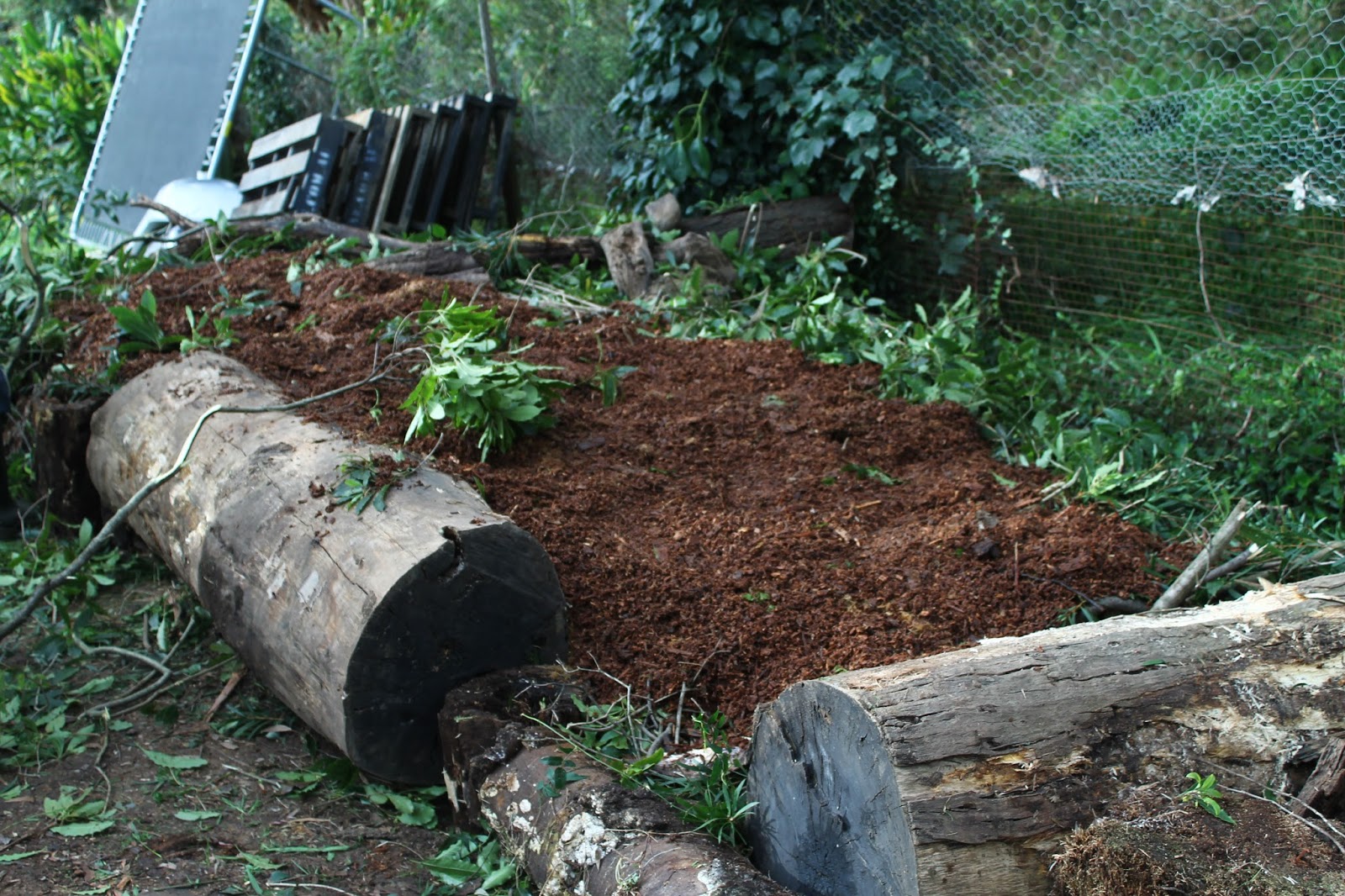
so recently i signed up to help out the wonderful people of Permablitz Melbourne and do some documenting of their various projects. As it happened, my first one happened to be in the misty Dandenongs, a long two and a half hour drive from home but worth it nevertheless. Here's a little of how the day went. all pics are essentially before, during and afters... x


Arriving down what I’m sure would usually be a pretty low key suburban street, there was already a distant buzz and hum in the air of cheerful voices, tools getting unloaded and directions being handed out accordingly. The calibre of this permabltiz comes as no surprise however as Penne, Wolfgang, Joshua, their family and friends are facing some incredibly hard times with the recent diagnosis that Joshua, their delightful five soon to be six year old son, has developed tumours. As any family would do when faced with news of this category, it seems from the outside looking in that although it is devastating and overwhelming, their response has been one to immediately look at all of their options, become pillars of strength for Joshua and each other and give Joshua every possibility of a recovery. The entire day ran without a hitch due to wonderful organization and preparation. Not only did each area to be built have a specified team leader to oversee the day, but also incorporated workshops on no dig beds/sheet mulching and Hugelkultur, plus an amazing array of homemade foods.

Penne is a PDC graduate of the north and she has used this knowledge/skill set to design essentially a healing garden that from every angle will help and aid Joshua on his path to recovery. The design combines a food forest, an indigenous bush medicine area, a living tipi and secret garden for Joshua, a berry bed, a herb spiral, Hugelkultur area and my overall favourite of the day a ‘food farmacy’. The idea behind this is that next to Joshua’s main play area, there is a huge garden bed that will be full of edible plants and herbs that are shown to be natural aids in stopping the growth of tumours. Wileke, a herbalist and team leader of the food farmacy area provided a wealth of knowledge in terms of herb guilds, the construction of the dig garden bed and overall theory behind the area. Joshua will be able to run up and through this garden whenever he so pleases and eat anything from there, thus providing him with natural forms of medicine in a way that he wont even realise.


The food forest is to be three tiers high that will provide the family with not only organic sustenance but to also provide a sound and wall barrier from the neighbouring properties who sadly recently cleared all of their bordering trees. Joshua’s living tipi and secret garden are also incorporated into this area that will provide him with his very own area of relaxation and escape. The other side of the food forest incorporates the drystone wall and herb spiral. The amount of work involved not only on the day but too in terms of preparation leading up to the blitz is staggering and huge props must be given to Penne and her family.


The Hugelkultur ‘mound culture’ bed area bed lies beyond the food forest and will not only be a vital source nutrients for the garden but will help retain moisture on site, improve soil fertility and drainage but also incorporates the lush bush scape by making the most of the fallen woody debris that would otherwise most likely be somewhat of a hindrance to the site. Dr. Compost provided a wealth of information during the workshop and throughout the day with guiding the Hugelkultur team to get as much done as they possibly could.


As the day drew to a close, all aspects of the garden were well under way with not too much more to be done other than some planting and further sheet mulching, plus some little finishing touches here and there. The food farmacy was entirely finished and planted. It was a wonderful day to be part of with so much positive energy flowing through the garden with over 50 volunteers coming and going throughout the day, its hard not to imagine a beautiful, sustaining, invigorating and beneficial garden growing and flourishing in the very near future.


Monday, August 12, 2013

nettle nurturing

i suppose majority of us can remember at some stage in our very early years our first introduction to the stinging nettle. carefree and happy, playing unsuspiciously in the great outdoors  then the next minute, tears, shock and wailing at the nasty stinging green plant. or something like that anyway. Either way, the fact of the matter is that everybody knows about stinging nettles. Thankfully though as with most things to do with our so called modern day 'weeds' and their rise to fashion in the food kingdom, nettles have had a wonderful resurgence into the mainstream and have started to shake that old misconception. As a nettle nurturer I was thrilled to welcome the arrival of a self seeded nettle in the very tidy row of leeks not too long ago. imagine my delight therefore, when trawling through the paddocks on the creek bed the other day, there, under the shade of a river red gum and behind the army of mallow, was an entire crop of these misunderstood friends... 


so after a half hours picking and plucking i was only mildly stung (happily so albeit), and had at my disposal bushels of nettles ready to go. enter, google. it seems to me the more i research plants, especially 'weeds', the more illogical it seems that these plants are classified as 'invaders' and enemies of the garden. I understand in terms of farming and cropping why they really can become a hassle as they undermine the quality of the yield, but in terms of the home garden/vegetable garden, the benefits they bring so far outweigh the negatives its seemingly ridiculous that they were ever shunned in the first place. for example in my little list of nettle pros, for us humans they offer an ingredient that is packed full of nutritional content that can be used the same way as spinach, steeped into a tea that is said to help asthma, hay fever and general aches and pains, blended into a soup and even stinging nettle beer as seen on Hugh Fearnley-Whittingstall's River Cottage. cheers to that. for le jardin, anything a ladybird is fond of, so am I. apparently it's their preferred go to plant come the time in the season they lay their eggs. so, if I can encourage an army of ladybirds to erupt in my garden come aphid war time i'll happily keep strategic nettle bushes throughout the whole garden. Really, the list just goes on in favour of the humble misconstrued nettle. thank goodness for the resurgence of the weed...


anyway, leaf plucking ensued and finished it was time to start steeping my tea, snap freezing some of the leaves for a later date and brewing my liquid feed for the garden which will be rich in nitrogen. 
the tea was delicious. here it is steeping in the misty morning sun and here's to nettle nurturing from now on.


Sunday, June 30, 2013

wild and free

Yep. thats it isn't it? what we all want to be and what life in the 21st Century doesn't allow.. Ah well. thats a discussion for another day no doubt. So, Wild & Free you might ask? Well, as it goes for a brief moment in my not so distant past I dabbled in the art and business of floristry.
I have the utmost respect for florists not to mention the growers, whose back breaking business and lifestyle by and large goes unthought of by the everyday consumer. Flowers are expected to last for weeks, open on the 'correct' day, be disease free and have perfect blooms. Not much to ask is it? ha ha. As such, the more familiar I became with the flower industry the more disillusioned I was about the processes involved in the industry and how even though yes, flowers are a natural product, the amount of chemicals, toxins, plastics, irrigation and travel/transportation pollution etc involved essentially make this industry one of the most unsustainable industries going around. in my humble opinion.
that's not pointing the finger at anyone except for the big 'C' and 'G' (capitalism and globalisation), that encourage the everyday consumer to believe they can have whatever they want, whenever they want and for very little money. in terms of the floristry industry, I feel that this puts a huge amount of pressure on growers to grow flowers out of season, not suited to our climate and for florists to order in flowers from overseas. the more I learn about organic and sustainable food production and lifestyles, the more I think there are huge opportunities out there for floristry to become much more sustainable. Thats not to say there aren't amazing flower growers out there already producing and growing seasonal organic blooms, but it certainly is saying that people like this are at the forefront and the industry still has a long way to go.
Which brings me back to the initial point, wild and free. As I foraged the other day, it was hard not to pick all the little wild flowers that were sprouting up everywhere I looked. Yes, they aren't a bunch of magnolias, peonies and orchids. But they are beautiful because of what they represent. the natural world going about its everyday cycle, producing perfect flowers everyday, there for the picking. wild and free. I love bouquets and flower arrangements like this especially at the end of summer, when there's a variety of edibles gone to seed (which have to most beautiful not to mention beneficial flowers) and lovely summer blooms available. Anyway here is a little winter weed posy which isn't as spectacular as the ones that will be around in spring and summer but is nevertheless great because of what it is.